· Search
How a two-week-old site took #2 on Google, right below an established firm
For a search of our own name, behind another firm that shares it. The result, and the bot that now keeps our search work on a daily schedule.
Work for our own site · by Orion Jones
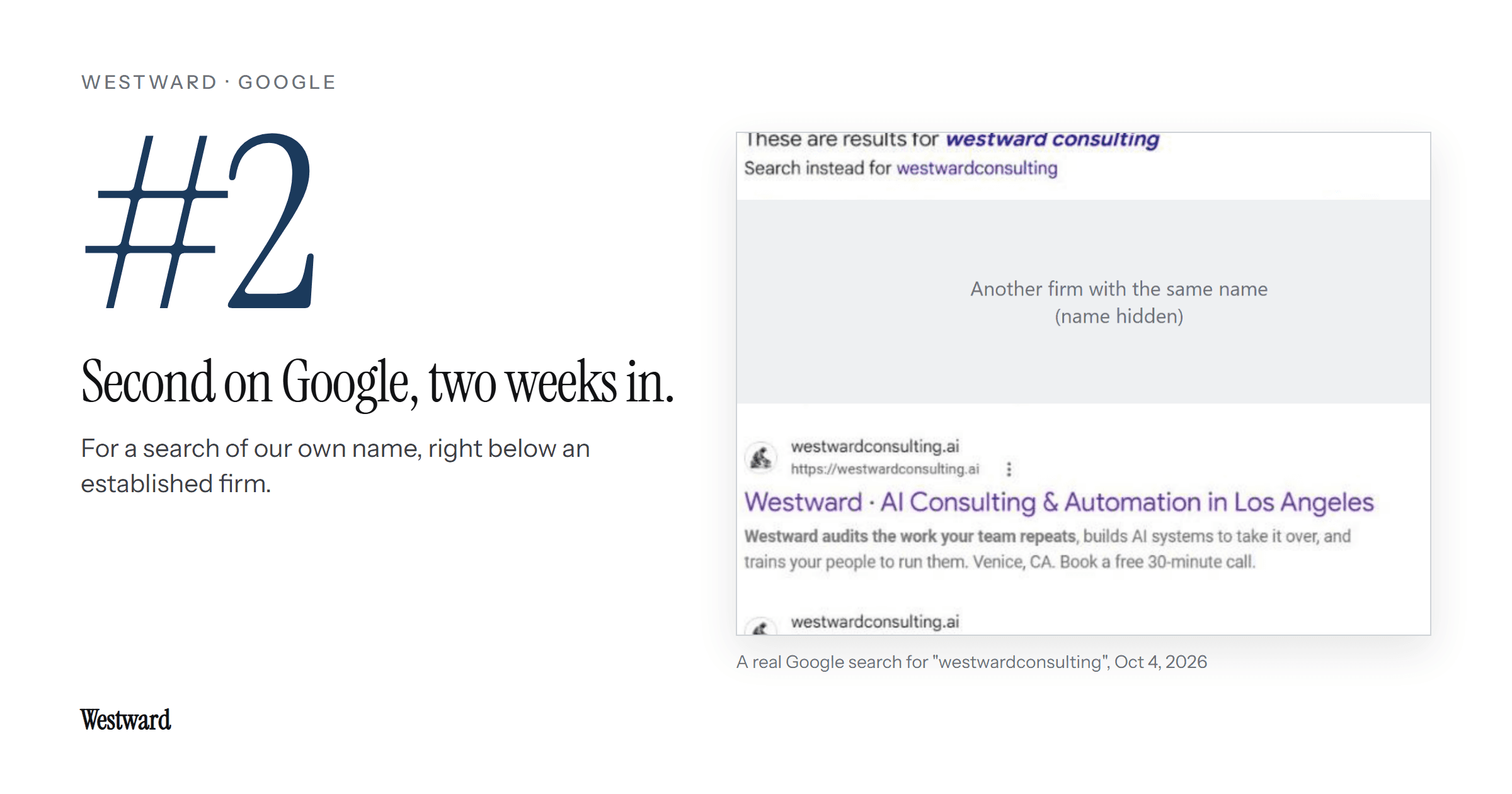
Two weeks after launch, Westward is the second result on Google. The search is our own name, and the first result is another firm that shares it and presents itself as long established.
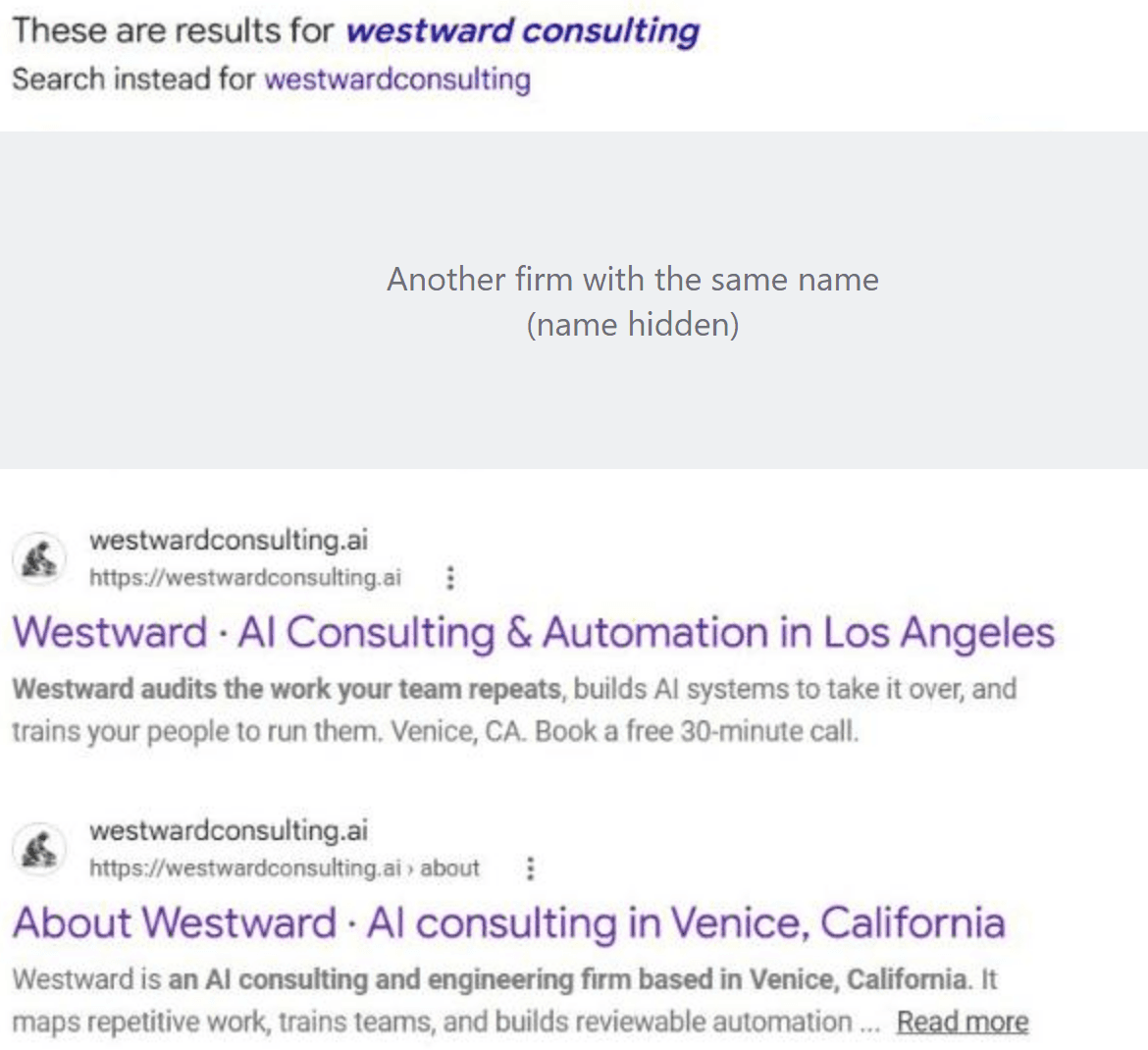
To be exact: this is a search for our name, not for "AI consulting". Ranking second for a name is the easy end of search. Ranking for what customers type when they do not know us yet is the hard end, and we have barely started. Rankings also move, so this is where we stood on October 4.
The same picture from Google's side
Google Search Console shows the other half: how often the site appeared and what happened next.
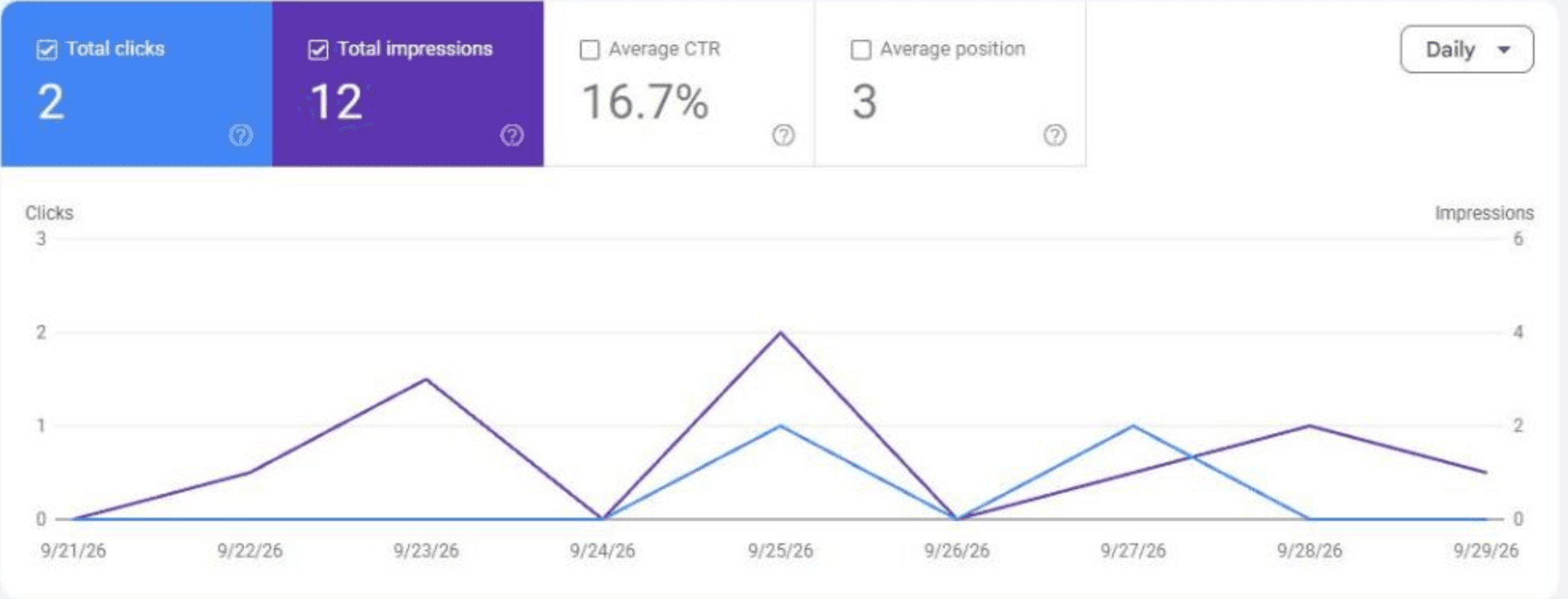
Twelve appearances in search and two clicks is small, and we are showing it as it is. The useful part is the position: when the site did appear, it appeared near the top, at an average of 3.
The bot that keeps it going
A result like this is easy to get once and then forget. So we built a bot that runs a company's SEO (showing up in Google) and GEO (getting named in AI answers from ChatGPT, Perplexity and Google's AI Mode) every day, sets its own targets, and writes down what it did. It was only set up on this site this week, so it did not produce the result above. It is what keeps it going from here.
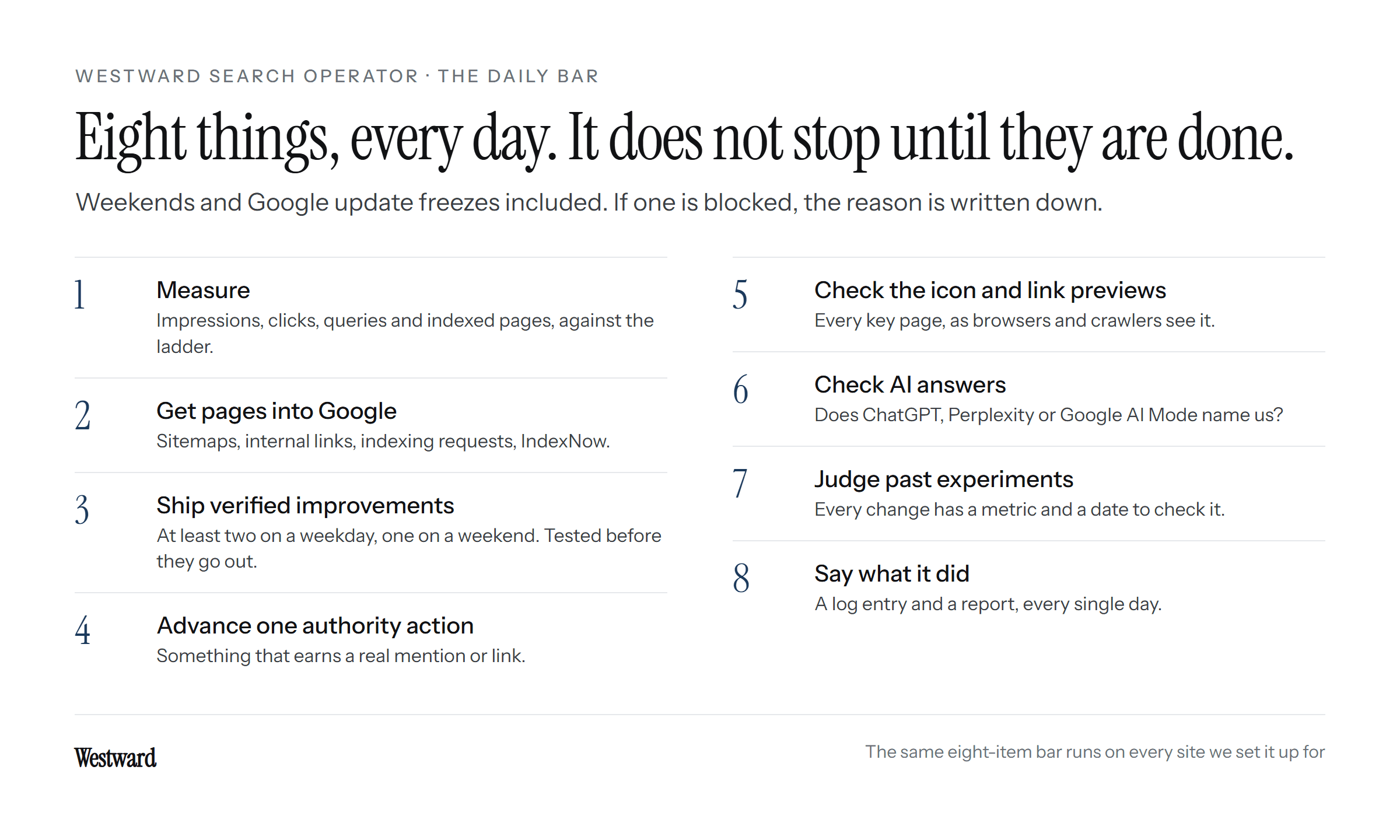
Its day is eight checks, and a day does not count as done until all eight are met or a blocker is written down. Weekends are included.
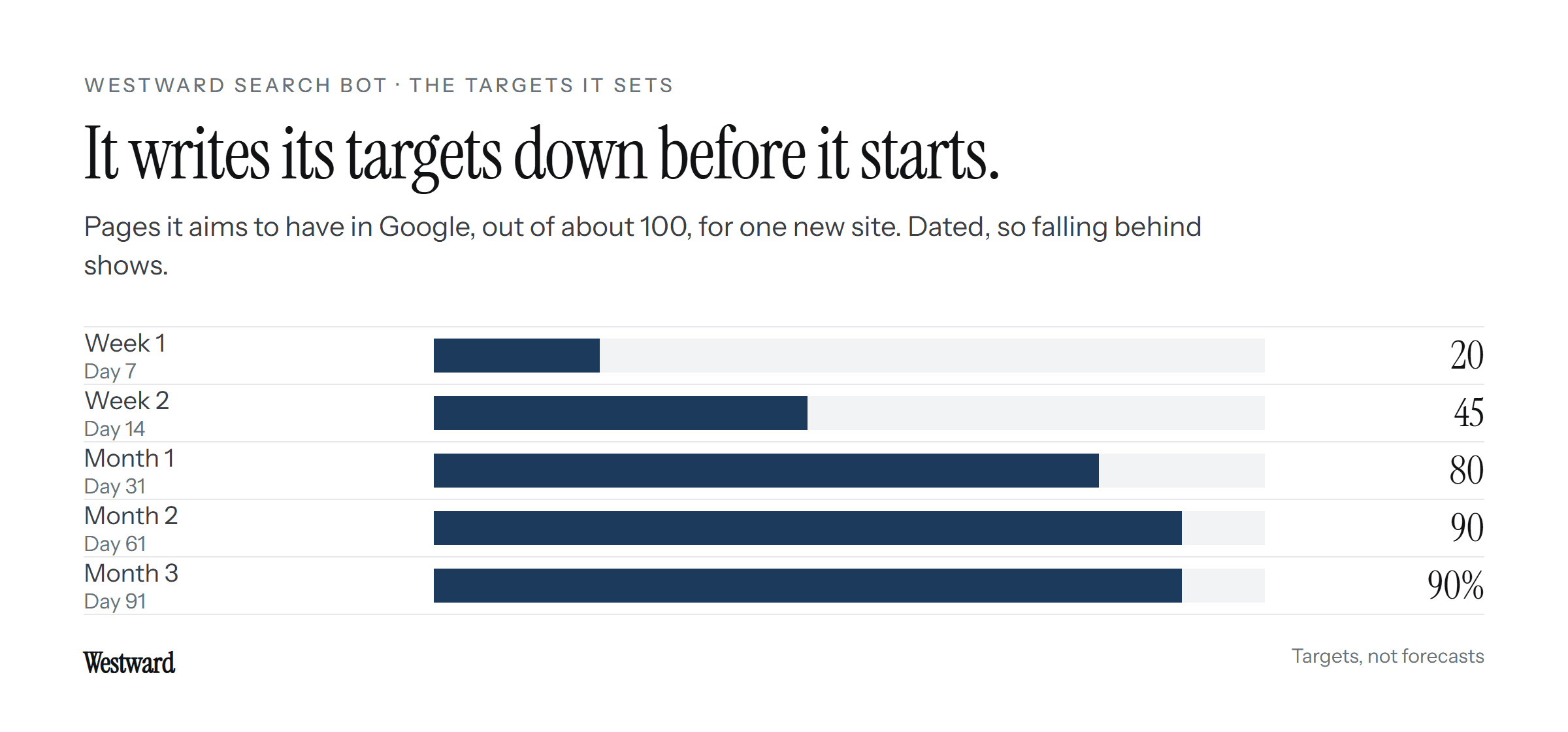
Before it starts on a site, it writes a ladder of dated targets: how many pages it aims to have in Google, how many searches should show the site, how many clicks. They are targets, not forecasts, and their job is to make slipping visible. If the bot falls more than a quarter behind, it switches to catch-up mode and says so at the top of its report.
What comes next
We will check the same search again and post what changed, good or bad. If you want this kind of daily search work, with the targets written down and every number reported plainly, book a call below.
Get the daily AI Brief
AI news, business news and a market view in one short email, every story with its source.
Want this for your business?
A free 30-minute call. Just your email and the times that work.