· AI news
Today in AI, Oct 15: rules before an AI agent spends your money
American Express built a way to get your approval before an AI agent pays. What it means for a small business, and the limits to set first, in pictures.
Work for business owners · by Orion Jones
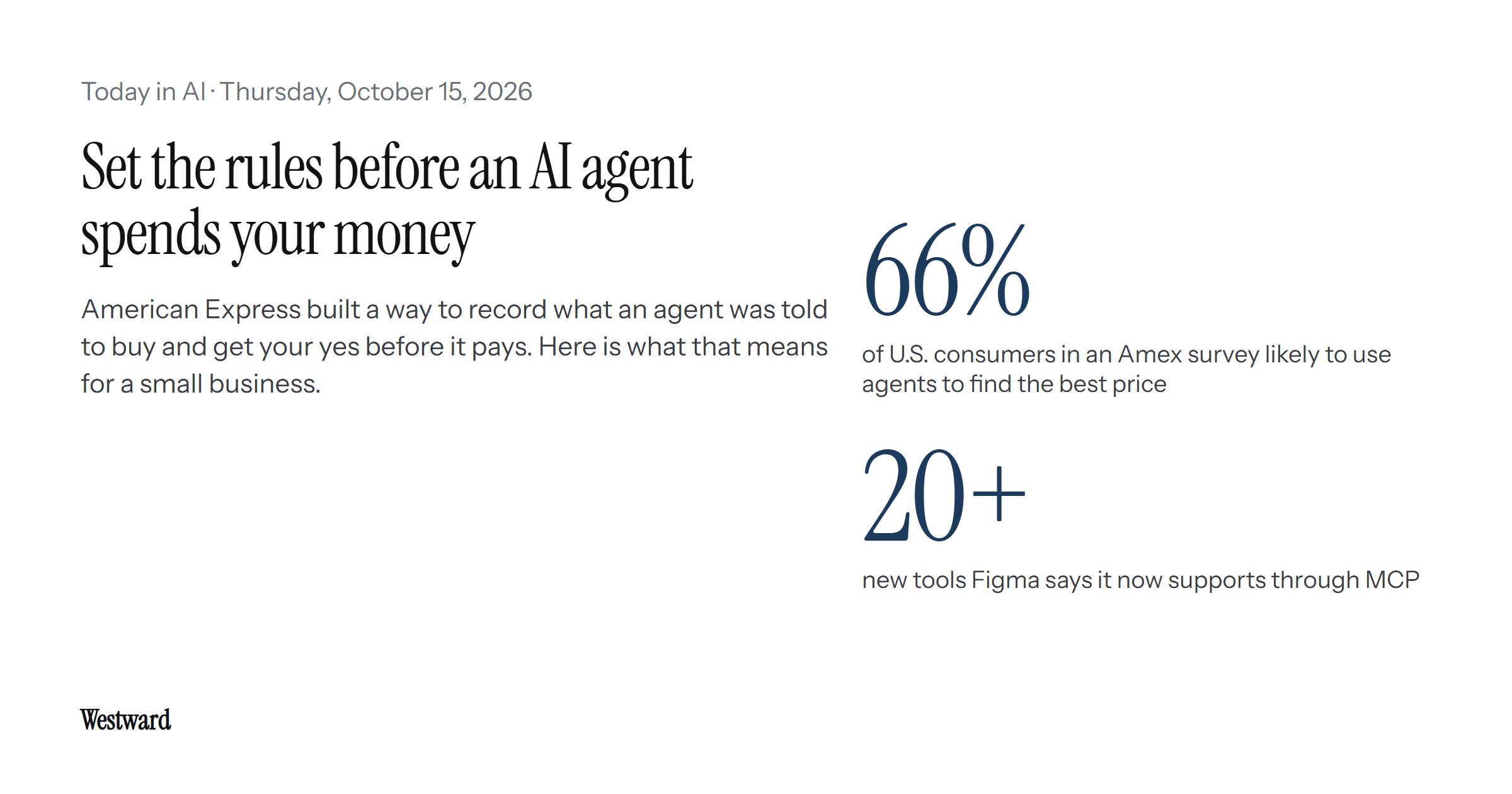
This week's most useful AI story for a small business is not a new model: American Express built a way to write down what an AI agent is allowed to buy, and get your yes before it pays. Here is what it does, why it matters if you run a business, and what to set up before you let any agent near a card.
What Amex built
On October 13 American Express introduced its Intent Intelligence Framework. It records a customer's instructions, such as the merchant, a maximum budget and product preferences, and has the customer approve them before an AI agent can pay. The agent then checks out with a stand-in payment credential instead of the real card number, and Amex can keep a log of what each agent was allowed to buy (TechCrunch).
Amex's own announcement shows the idea on four phone screens: confirm what you want, see the intent confirmed, approve the purchase, and get the receipt.
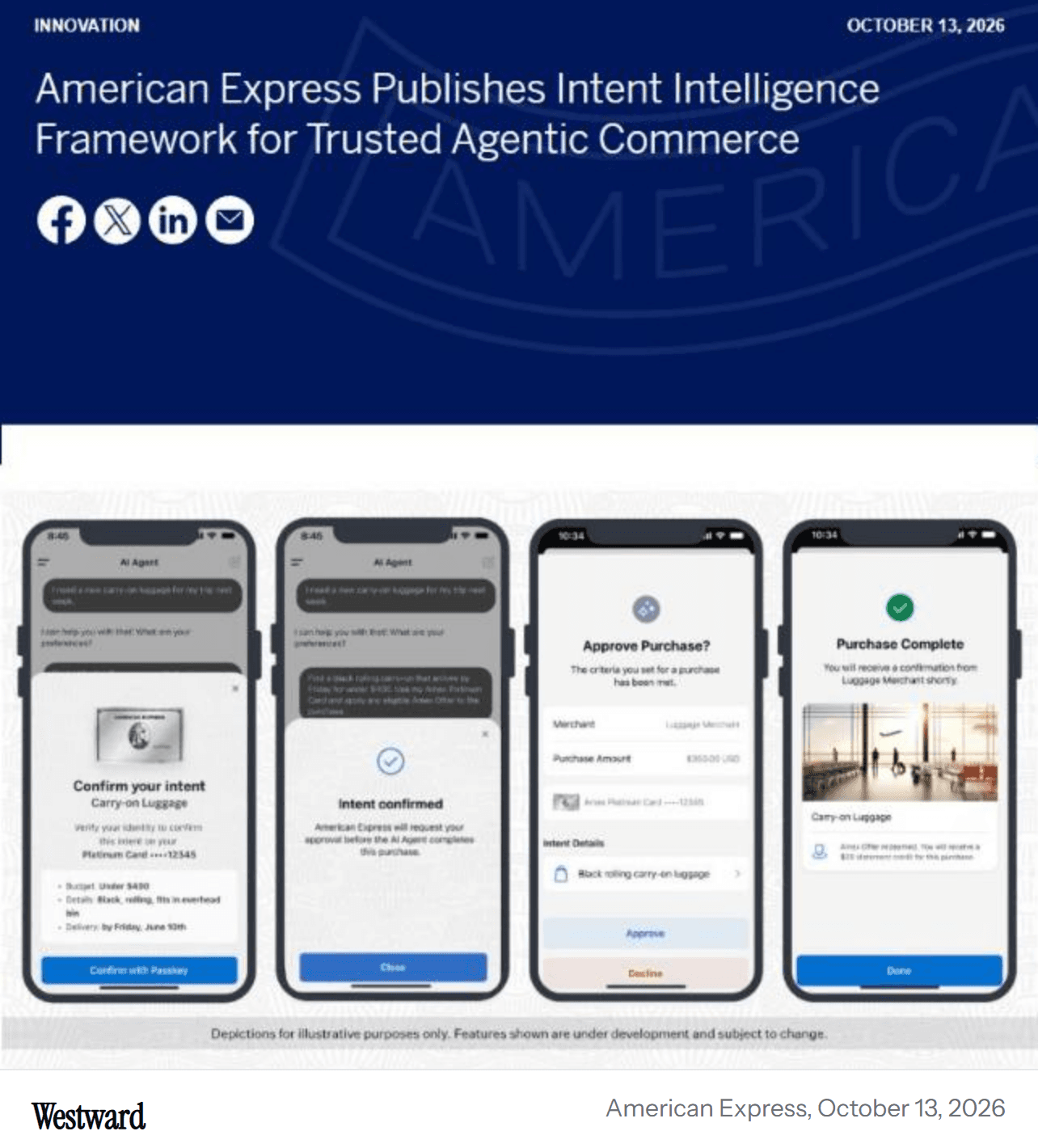
Amex says it has not yet seen a rise in disputes from purchases made by agents. In an Amex survey, 66% of U.S. consumers said they are likely to use agents to research the best price in the next 12 months.
Why it matters if you run a business
The hard part of letting software buy for you was never the clicking. It is knowing that it bought only what you meant, from where you meant, for no more than you meant. Amex's answer is to put those limits in writing and ask for a person's approval before any money moves.
The table lays out each limit and what it does.
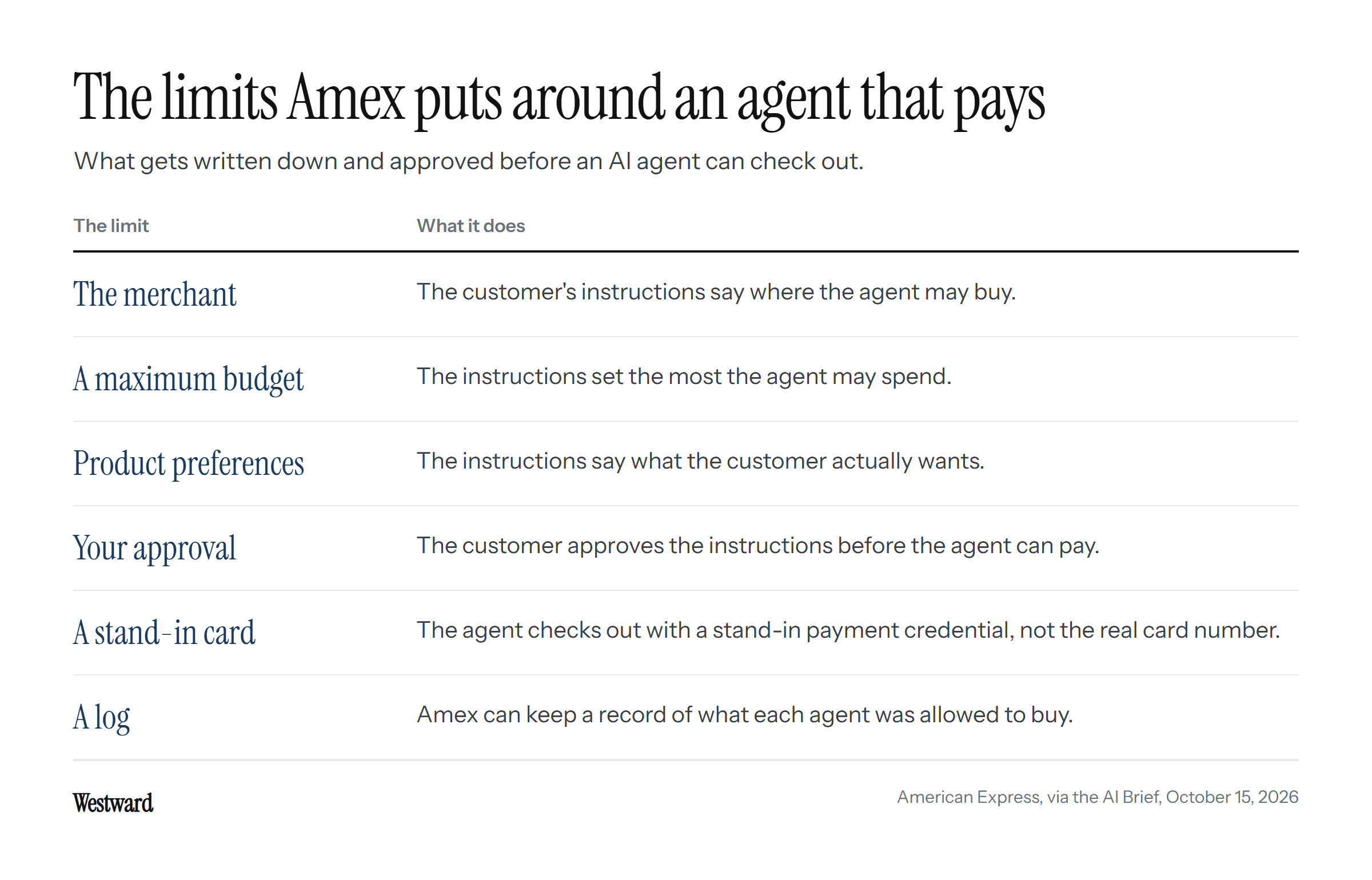
What it means: If you plan to let an agent buy supplies for you, look for this kind of written budget and approval step before you hand it a card.
The same idea showed up at Figma
On October 14 Figma announced Specs, an editor where a team writes down its design rules so people and agents can follow them, plus a central place for design libraries, code libraries and guidelines that agents can consult (TechCrunch). Figma says it now supports more than 20 new tools through MCP, a standard way for AI tools to connect to other software.
What it means: An agent that makes your marketing or web pages stays on brand only if your brand rules are written down where it can read them.
What to do this week
Before any agent spends money or speaks for your business, write down its limits the way Amex does:
- Where it may buy or act, and where it may not.
- How much it may spend at most, per purchase.
- What you actually want, in plain words it can check against.
- Who says yes before money moves or anything goes out.
- What gets logged, so you can see later what it was allowed to do.
Keep your real card number out of it wherever a stand-in credential is offered, and keep your brand rules in one written place an agent can read.
The pattern
Three of the four AI stories in today's brief are about rules rather than raw ability: what an agent is allowed to buy, which design rules it must follow, and how much AI went into a song. As agents take on more work, the written limits around them matter as much as what they can do. That is how we start every build: decide what the agent may do alone and what needs a person's yes.
The full issue, with every source and the day's markets, is in today's AI Brief. If you want an agent working in your business with those limits set from day one, book a call below.
Get the daily AI Brief
AI news, business news and a market view in one short email, every story with its source.
Want this for your business?
A free 30-minute call. Just your email and the times that work.